Saturday, 9 November 2024


🌾 πŸ”†Lippan Art: The Desert’s Shimmering Craft of Clay & Mirrors

Traditional • Sustainable • Timeless

Lippan Art, also known as Mud and Mirror Work or Lippan Kaam, is a traditional mural craft originating from the Kutch region of Gujarat, India. This art form transforms plain wall surfaces into glowing artworks using clay (lippan) and mirrors (aabhla) that reflect natural light beautifully across interiors. Once used to decorate humble village homes and round mud huts (Bhungas), Lippan Art is now cherished globally as a luxurious statement dΓ©cor style.

Lippan Art (sometimes called Lippan Kaam, mud & mirror work, or mud mirror art) is a traditional mural-craft form from the arid region of Kutch in Gujarat, India. 
The technique involves applying clay or mud (traditionally mixed with animal dung or plant‐waste) onto walls and then embedding small mirror pieces and reflective elements into the design. The result: shimmering surfaces that catch light and transform even simple huts into bright, decorative spaces. 
Motifs typically include peacocks, camels, trees, animals, birds, mandalas, geometric patterns—drawn freehand, often by women artisans who develop the design directly. 

Origin & Cultural Roots

The origins of Lippan Art are rooted deeply in local traditions of rural Kutch. While exact beginnings are lost to time, it emerged as a decorative art form for village homes and bhungas (traditional circular huts) to beautify living spaces and reflect light in the arid environment. 
Historically, it was executed by women of communities such as the Rabari, Mutwa, Meghwal and also Kumbhar/Kunbhar communities in Sindh/Kutch. Wikipedia
Beyond aesthetics, the mud-mirror mix served practical functions: insulating interior walls against heat, reflecting light, and helping keep homes cooler in harsh climates.


🌿 Origin & Cultural Heritage

Lippan Art is especially associated with the Rabari, Mutwa, and Meghwal communities of Kutch.
Historically, this art was created by women who decorated their homes to reflect light inside dim desert interiors and to bring texture and ornamentation to their living space.

What began as functional wall insulation mixed with beauty has grown into a significant cultural symbol of Gujarati craftsmanship.


🎨 Materials & Traditional Technique

ElementTraditional MaterialPurpose
Clay MixMud blended with natural fibers or dungHelps insulation + forms raised patterns
Mirrors (Aabhla)Small hand-cut reflective glass piecesReflect and scatter sunlight
ApplicationHand-molded, free-form relief designsNo stencils, pure intuitive artistry

Designs include motifs of camels, trees, birds, peacocks, mandalas, village life, and geometric patterns, all inspired by nature and daily rural life.The rise of social media tutorials and DIY workshops has also revived this art among younger creators.


Maybe it’s the warmth of the clay, maybe the way the mirrors catch even the gentlest light.

It reminds me that beauty doesn’t need to shout; it can grow quietly, patiently, in the background of everyday life.

In each piece I create, I feel connected to the women of Kutch who shaped these designs long before me—using only their hands, their intuition, and their love for the spaces they lived in. It’s more than an art form; it’s a reminder that roots matter, traditions breathe, and our stories deserve to be held with care.

Today, when I create Lippan panels here in Canada, I carry a piece of home with me. And every artwork feels like an offering… to culture, to memory, to my journey, and to the quiet light we all carry within.

πŸ“Έ Links

“Clay, mirrors, and stories from the sands of Kutch.
A tradition that still glows in 2025.”

✨ Lippan Art is more than visual decoration.

It is heritage, memory, earth, and light woven together.
It carries the warmth of desert homes, the skill of women artisans, and the timeless beauty of handcrafting.

The art continues to evolve, just like its creators.
And that’s what keeps it alive.


Saturday, 26 March 2022

Sakura


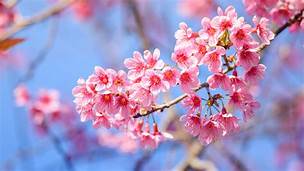
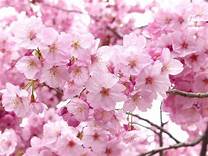
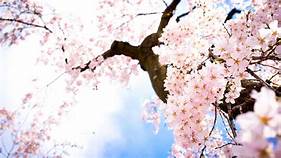
Sakura means a tree that is special to Japanese people and it is also the national flower of Japan known as cherry blossom. Sakura is a symbol of revival, rebirth or coming back to life. Sakura's meaning is associated with its blooms and this flowering tree tells about the new beginning and never losing hope in life.


Sunday, 27 February 2022

Quebec  


The Algonquin word “Kebec” means “where the river narrows.

The Province of Quebec is Canada’s greatest producer of maple syrup.

Quebec’s population is over 8 million.

Quebec City is the only walled city in Canada. It still has three miles(4.7km) of walls.


J.A Moisan Epicier was established in 1871 and is the oldest grocery store in North America.

Approximately 150 days each year Quebec City has at least one inch (205cm) snow.


 Is Quebec really part of Canada?

  • Quebec, as you may know, is the fiercely francophone province of Canada that has held two failed secession votes and somehow still remains part of Canada. The question “is Quebec a part of Canada?” is loaded with centuries of history and ton(ne)s of baggage.

What are some interesting facts about Quebec?

  • Learn Ten Facts about Quebec City, Canada. Quebec City, like most of the province of Quebec , is a predominantly French-speaking city. It is also known for its architecture, European feel, and various annual festivals. One of the most popular is the Winter Carnival which has skiing, ice sculptures, and an ice castle.

                        Does Quebec Canada have a nickname?

  • QUEBEC NICKNAMES. Montreal, Quebec. Quebec's Metropolis (La Metropole du Quebec) - The largest and most cosmopolitan city in Quebec. La metropole, or The Metropolis; The City of Saints - Many of Montreal's streets are named after holy people who've been canonized, for example, St. Urbain, St. Elizabeth, St. Catherine.

Facts About Quebec, Canada's Largest Province

🍁 16 Fun Facts about Quebec

·       Quebec is one of Canada’s most fascinating historic cities, offering heritage seeping through every building and clear to see from street to street. In fact, many European visitors may feel quite at home as they walk around the city!

·       It’s a beautiful place – but there’s likely plenty that you might not know its history!  Here’s a stack of fun facts about Quebec to clue you in…

1.    Where does ‘Quebec’ come from?

The name ‘Quebec’ actually derives from Algonquin. The original word, ‘kebec’, is said to roughly translate as ‘where the river narrows’.

2.    It’s a bit of a walled oddity.

There are no other walled cities north of Mexico outside of Quebec! The walls run all around the city, effectively enclosing it. Believe it or not, the walls here extend to around 4.6km in length. These enclose the Old Town, too, which is a UNESCO World Heritage site.

3.    It’s very continental!

·       The European stylings of Quebec aren’t accidental. The look and feel of the city largely borrows from the original settlers, who came to Quebec before many other regions in North America. The city is more than 400 years old.


·       Old Quebec

·       4.    There’s a historic hotel here.

·       The most photographed hotel in history can be found in Quebec. Specifically, it’s the Fairmont Le Chateau Frontenac. It’s a true spectacle – and little wonder why people keep taking photos of it!

·       5.    Quebec is close to natural beauty.

·       Quebec is close to some of the most stunning natural waterscapes in Canada. In fact, the local Montmorency Falls are actually taller than the cascades you’ll find out at Niagara! The falls here measure around 83 meters in height, making them a staggering natural feature.

·       6.    Ever tried poutine?

·       One of the most popular traditional dishes eaten in Quebec is poutine. Poutine is a popular comfort food option which consists of fries, cheese, and gravy. There’s a similar phenomenon in the north of England, but it goes by a less eloquent name – cheesy chips!

7.    French is widely spoken in Quebec.

Most of the people in Quebec speak French as their first language. Only 5% of people settled here don’t! What’s more, it’s thought that around 80% of people living in Quebec refer to French as their main language of choice.

8.    For Canada, Quebec summers are pretty warm.

Despite the area generally being known for its wintry days, Quebec summers tend to be pretty enjoyable, at least by British standards. The average temperature during summer in the city clocks in at around 25 degrees centigrade.

9.    But in winter, those Canadian temperatures kick in!

However, it’s winter when you’re really going to need to keep an eye on those temperatures. It’s thought the average January temperature rolls in at around -7.8 C! That’s pretty chilly even by the coldest of British standards!

10. Much of Quebec is Irish.

Quebec is also home to a strong Irish population. You will find plenty of Irish businesses here, such as authentic pubs owned and operated by families over on the Emerald Isle. It’s thought that around 40% of people in Quebec are descended from Irish heritage.

11. Snow falls regularly in Quebec.

Quebec is, as you might expect, well known for its snow. In fact, on around 149 days each year, you’ll see the snow reach up to an inch high.

12. Montreal is not the capital of Quebec.

It’s a common misconception that Montreal is the capital of Quebec as a province. As you might actually expect, the capital is Quebec City. In fact, be careful not to mix Quebec as a province and Quebec as a city mixed up, as they are two different things!


13. Quelle surprise!

Quebec remains the oldest community in North America that speaks French.

14. Quebec is a winter sports hotspot.

Many people choose to visit Quebec for skiing fun and other winter sports. That’s because the famous Le Massif slopes are close by, as is Mont St Anne. Le Massif is massive by name and massive by nature, with a 770m altitude for you to ski and snowboard down at your leisure. Better take a deep breath!

15. Quebec has its own Notre Dame!

Paris might have the Notre-Dame Cathedral, but there’s a Quebec equivalent, too. The capital city is home to the Cathedral-Basilica of Notre-Dame de Quebec. This is an important part of the Old Town UNESCO Site. It’s also one of the oldest Roman Catholic properties north of Florida.

16. Quebec also has a ‘Shepherd’s Pie’ variant.

Believe it or not, Quebec City has its own spin on shepherd’s pie. It’s called pate chinois, and it’s a very similar recipe – however, for some reason, the name translates into ‘Chinese pie’! Quite where they got this combination of words from, no one is quite sure!

Is maple syrup made in Quebec?

Yes! Quebec is the largest producer of this sweet treat in the world!

Which are the most popular cars sold and driven in Quebec?

Toyotas, GMs and Fords tend to be the most popular rides in Quebec right now.

Why did the French abandon Quebec?

The French eventually abandoned Canada as ‘New France’ due to the cost of keeping it as a colony!


Fill the Sign-Up Form


  🌾 πŸ”† Lippan Art: The Desert’s Shimmering Craft of Clay & Mirrors Traditional • Sustainable • Timeless Lippan Art, also known as Mud...